
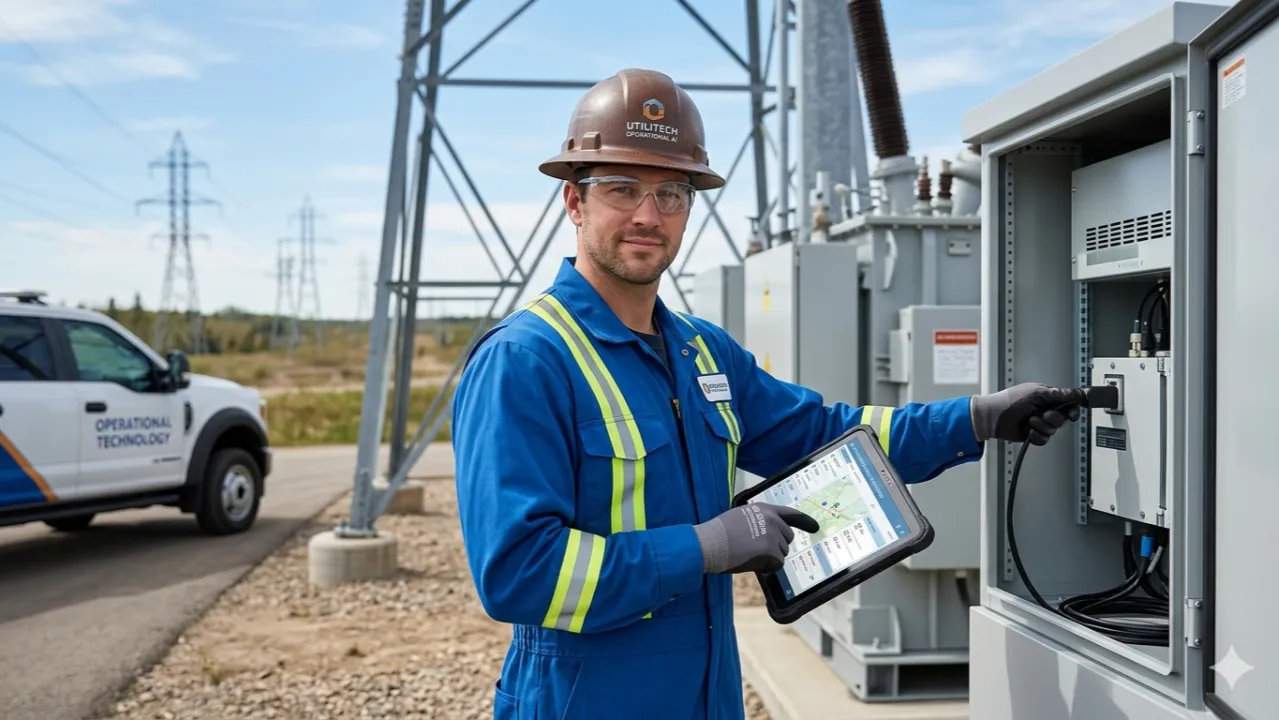
For the past 20 years, utilities, telcos, and energy companies have invested heavily in seeing what’s happening across their networks — smart meters, SCADA systems, IoT sensors everywhere. They’ve built world-class sensing layers. But the part that actually fixes things — the field teams — hasn’t evolved at the same pace. Work orders, phone calls, gut feel. That’s been the operating system.
That gap is finally closing, and AI is the reason. But not in the way most people think. This isn’t about flashy headsets or sci-fi dashboards. The real shift is happening underneath, in the quiet plumbing of how work gets decided, dispatched, and executed:
- Predicting failures before they happen.
- Sending the right technician, not just the nearest one.
- Forecasting demand based on weather, usage, and asset health.
- Prioritising jobs before a human even opens the ticket.
- Continuously re-optimising routes as the day unfolds.
- This is where the actual balance sheet value hides.
Every work order is training data
Here’s the part most companies still miss: every completed work order is training data. Time on site. Parts used. Root cause. Asset age. Local weather conditions.
Yes, field notes are notoriously messy, handwritten, and riddled with legacy shorthand. But that’s exactly where semantic AI thrives — turning unstructured field chaos into clean, predictive signals. Handled properly, this data becomes the foundation for a predictive, self-correcting operation. Ignored, it’s just lost signal.
The dispatcher’s gut
I’ve sat in enough operations meetings to know this — the dispatcher’s gut feel is treated as gospel. Right up until it sends the wrong crew to the wrong asset at the wrong time.
AI doesn’t replace that human experience. It makes the good calls repeatable and the bad ones less frequent. But it only works if the team actually trusts it. Black-box algorithms breed manual workarounds. The breakthrough happens when AI acts as an explainable co-pilot — showing the dispatcher why a route was re-sequenced, preserving human agency while sharpening the execution.
In the ventures I’ve built, the costliest operational failures were never wild surprises. They were clear patterns we only recognised after the fact, even though the data had been sitting there all along.
A note on XR and AR
Yes, remote assistance has its place. Putting a senior engineer “on-site” via a headset to guide a junior tech can be incredibly useful. But it’s an incremental fix, not a systemic transformation. The true shift is in prediction and scheduling — not what the technician sees once they get there, but what the system already knew before they even started the truck.
The scorecard that matters
From the customer’s seat, and the board’s perspective, this is the scorecard that matters:
- Fewer outages through predictive intervention.
- A massive leap in First-Time Fix Rates and slashed MTTR.
- Safer field operations by flagging risks before boots hit the ground.
- A lower structural cost to serve.
- Everything else is just implementation detail.
The companies getting this right aren’t looking to replace their workforce. They’re upgrading it. It’s about giving a stretched, ageing field team the foresight of a much larger, more experienced organisation, without the friction of hiring one. The job shifts from guesswork to judgment. And judgment is exactly where humans were always meant to operate.
How is your organisation bridging the gap between what your network senses and how your field teams react?